 |
| Home | How-to Articles | Jon's eBooks & Books | Blog | Gallery | About Jon | Contact | Links |
|
|
||||||||||||||||||||||||
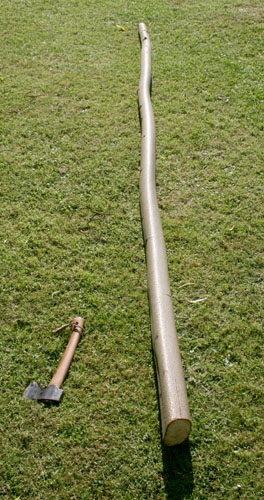
| In the Spring or Summer time Cut a long piece of
Lime wood (sometimes called Basswood) about
2 - 4 inches thick at the base with as little knots and side branches as possible.
The bark will be easier to remove at this time of year when the sap has
risen. Personally I wouldn't cut down a single lime tree (unless there were many together). This wood was taken from stool of coppiced Lime. Often there will be such shoots around where large lime trees have fallen. Cut thought the base of the wood as cleanly as possible on a slant. (cutting at a slant will stop rain water etc resting on top of the cut and will reduce the chances of the stump rotting.) |
 |
|||||||||||||||||||||||
|
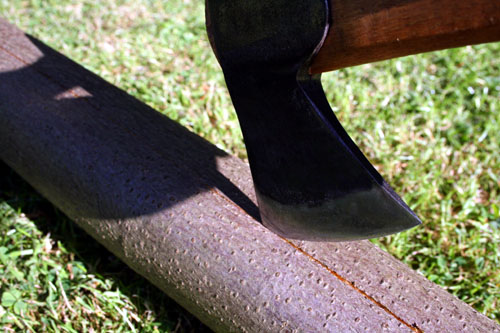
Stripping the bark Cut thought the bark in a line down the length of the wood. |
 |
|||||||||||||||||||||||
| Start to peel back the bark. It will probably
be hard to do with just your fingers because the bark is so strong.
Make a tool called a 'Spud' to help you (a chisel shaped piece of wood). |
 |
|||||||||||||||||||||||
| Focus on loosening the bark from half way around the wood, then fully prise back the bark at one end and pull the bark away from the wood in one sheet. |
 |
|||||||||||||||||||||||
|
Retting the Bark Once separated from the wood, put the bark it in a slow moving stream or lake. Use rocks or hooked sticks to keep it totally submerged. |
 |
|||||||||||||||||||||||
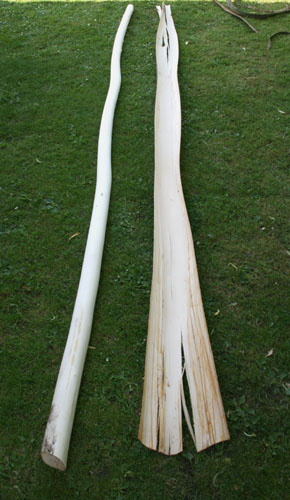
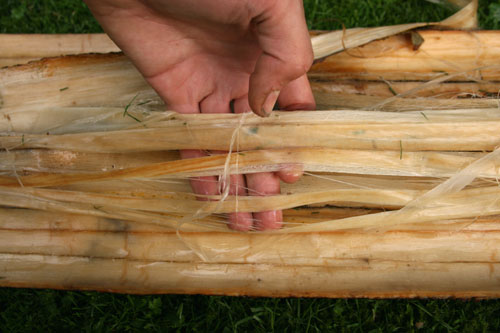
| In time
the layers of bark will separate. Depending on the temperature of the
water (and probably the natural bacteria levels too) it can take between
2 and 8 weeks for the bark to go from a solid structure to a soft
fibrous sheet of many layers, this process is called retting. By the
time it's ready the bark will stink too, but that's no bother. It will
probably be covered in slime and various creatures may have made their
home on the surface. Rub the slime off, then dunk and wring out the bark
numerous times until clean. |
 |
|||||||||||||||||||||||
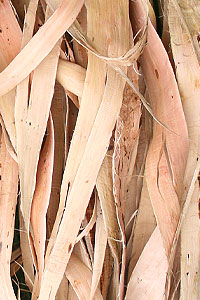
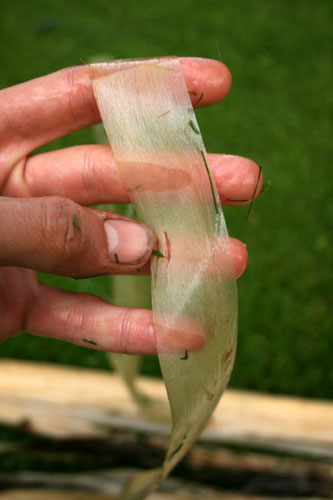
| This is one layer of bark,
the majority of these fibres will be extremely strong! Traditionally
these fibres are often called 'Lime bast' and have been used throughout
history for many tying and binding jobs. For our ancestors this would
have been a very valuable resource. |
 |
|||||||||||||||||||||||
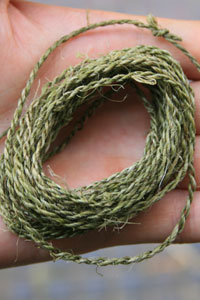
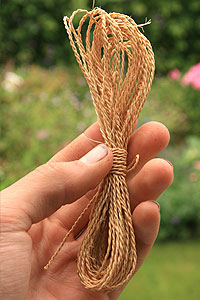
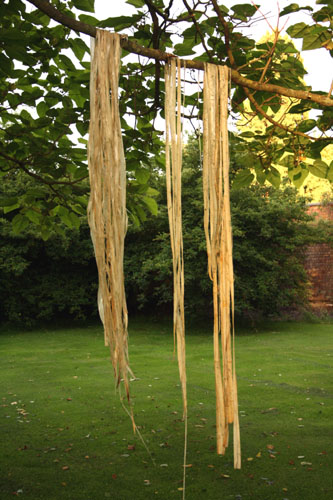
| When the fibres dry they become nice and soft
and are ideal for cordage making. Because the fibres are long you wont
need to introduce new fibres as often when making cordage; which is rather
helpful.
|
 |
|||||||||||||||||||||||
|
||||||||||||||||||||||||